
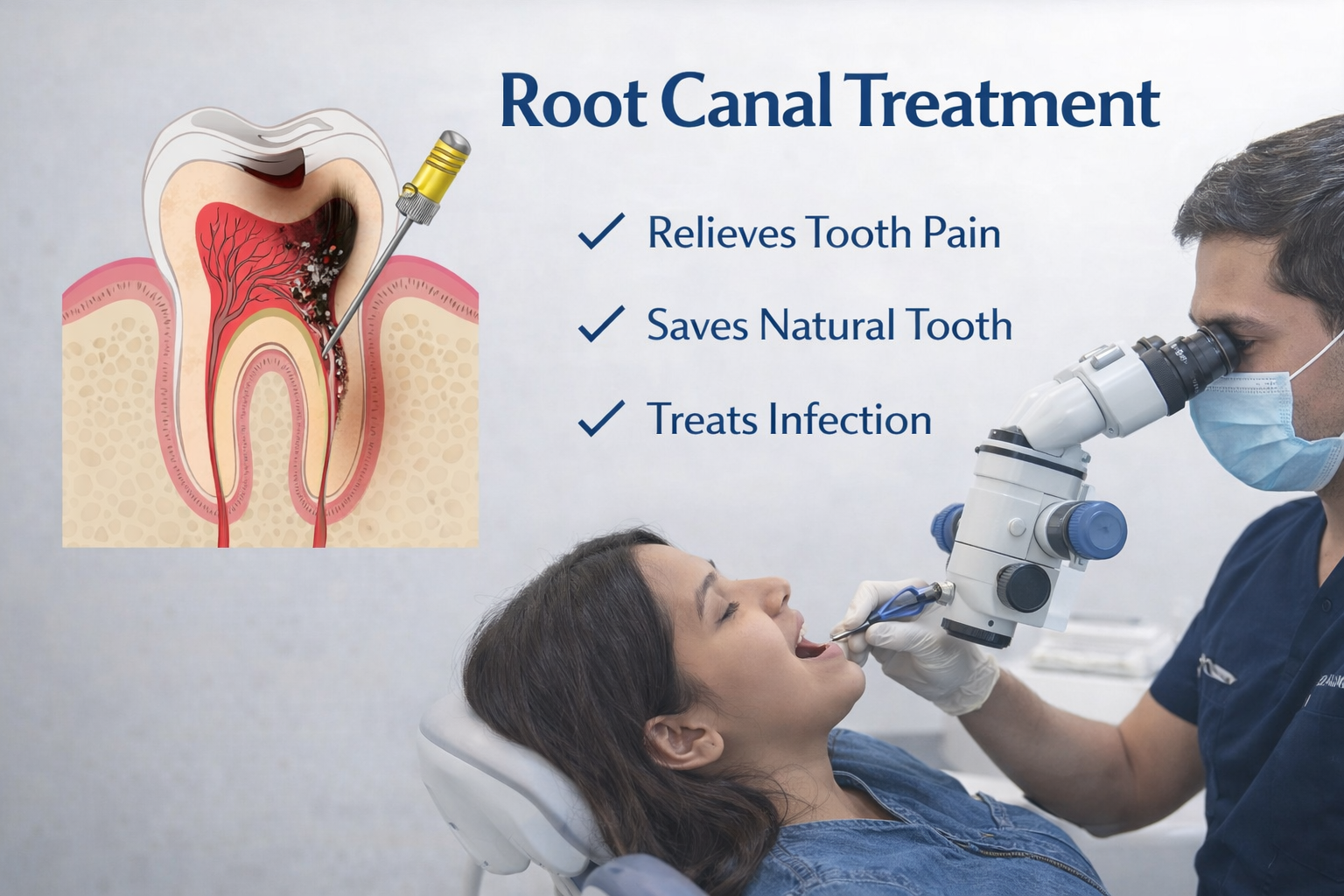
Root Canal Treatment in Nashik
At Fulzele’s Chaitanya Dental Clinic & Implant Center, we provide safe, comfortable, and long-lasting root canal treatment in Nashik for patients suffering from tooth pain or infection. A root canal is done to clean the infection from inside the tooth and save it from removal. With years of experience, Dr. Nilesh Fulzele focuses on relieving pain, preserving natural teeth, and restoring normal chewing comfort. Patients trust our clinic for honest advice, careful treatment, and results that last.
The “Why”: Is a Root Canal Actually Necessary?
A root canal becomes necessary when the inner part of the tooth gets infected due to deep cavities, cracks, or injury. This infection cannot heal on its own and usually worsens with time. If not treated, the infection can spread to the jawbone and nearby teeth, leading to swelling, severe pain, and tooth loss. Root canal treatment removes this infection and saves the tooth safely.
Symptoms to Watch For
You may need a root canal if you experience constant pain or discomfort in a tooth that does not go away. Pain while eating, chewing, or drinking hot and cold items is also a common sign. Other symptoms include gum swelling, tooth darkening, or repeated sensitivity. Early treatment helps avoid complications and reduces pain faster.
Red Flags: Symptoms You Should Not Ignore
If your tooth pain increases at night or becomes sharp and throbbing, it is a serious warning sign. Facial swelling or pus near the tooth also indicates active infection. Ignoring these symptoms can lead to abscess formation and may require tooth removal later. Visiting a trusted dental clinic in Nashik on time can save your tooth.
Myth-Busting: “Does Root Canal Really Hurt?”
Many patients believe root canal treatment is painful, but this is not true today. With modern anesthesia, the procedure is mostly painless and comfortable. In fact, root canal treatment relieves the pain caused by infection. Most patients feel much better immediately after treatment.
Saving the Tooth vs. Extraction
1.Saving the Tooth (Root Canal)
A root canal allows you to keep your natural tooth, which is always the best option for chewing and speaking. It maintains jaw strength and prevents nearby teeth from shifting. A saved tooth also looks natural and helps maintain facial balance.
2.Extraction (Removal)
Removing a tooth leaves a gap that affects chewing and appearance. It often requires an implant or bridge later, which increases cost and treatment time. Extraction should only be considered when saving the tooth is not possible.
Advanced Technology We Use
Digital X-rays / CBCT
We use advanced digital imaging to see the exact condition of the tooth and surrounding bone. This helps us detect infection early and plan treatment safely. It also reduces radiation exposure and improves treatment accuracy.
Rotary Endodontics
Modern rotary tools help clean the tooth from inside smoothly and efficiently. They reduce treatment time and improve patient comfort. This method also allows better cleaning of hard-to-reach areas inside the tooth.
Apex Locators
Apex locators help us measure the exact length of the root canals. This ensures thorough cleaning without damaging surrounding tissues. It improves the success rates and long-term results of root canal treatment.
Step-by-Step Comfort Journey
1.Local Anesthesia
Before starting, the tooth and the surrounding area are fully numbed. This ensures you stay relaxed and pain-free throughout the procedure. Most patients feel only slight pressure, not pain.2.Pulp Removal
The infected tissue inside the tooth is carefully removed. This stops the infection and relieves pressure and pain. The tooth is then prepared for proper cleaning.3.Disinfection
The inside of the tooth is cleaned and disinfected to remove all bacteria. This step is crucial to prevent future infection. Special solutions are used to ensure deep cleaning.4.Sealing
After cleaning, the tooth is sealed tightly to protect it from bacteria. This helps the tooth remain healthy for many years. A temporary or permanent filling is placed as needed.Why the Final Crown Is Non-Negotiable
After root canal treatment, the tooth becomes weaker because the infection and nerves are removed. Without protection, it may crack while chewing.
Simple Analogy:
A treated tooth without a crown is like a cracked wall without support. A crown strengthens the tooth and allows normal eating without fear.
Recovery Timeline: What to Expect
Day 1
Mild discomfort or sensitivity is normal. Pain medicines usually manage this easily. Avoid chewing on the treated side.Day 2–3
Pain reduces significantly, and swelling, if any, starts settling. You can slowly return to normal eating habits.Day 4 and Beyond
Most patients feel completely normal. Once the crown is placed, the tooth works like a natural one. Regular oral care keeps it healthy for years.Cost vs. Value: Root Canal vs. Extraction
While root canal treatment may seem costly initially, it is more valuable in the long run. It saves your natural tooth and avoids additional procedures.
Extraction often leads to implants or bridges, which cost more and take longer. Saving your tooth is always a wiser investment.
Why Choose Fulzele’s Chaitanya Dental Clinic & Implant Center?
Patients trust us because we listen, explain clearly, and treat them with care. Dr. Nilesh Fulzele is known for his calm approach and honest guidance.
Many patients consider him among the best dentists in Nashik due to consistent results, gentle treatment, and patient satisfaction.
If you are experiencing tooth pain or sensitivity, you can book an appointment with us and get clear guidance without pressure.
-
Frequently Asked Questions (FAQs)
1.Is root canal treatment safe?
Yes, it is a very safe and commonly performed dental procedure when done correctly.
2.How long does a root canal last?
With proper care and a crown, a treated tooth can last many years.
3.Can I eat after treatment?
Yes, but it is better to avoid hard foods until the crown is placed.
4.How many visits are needed?
Some cases need one visit, while others may need two, depending on the infection.
5.What happens if I delay treatment?
Delaying can worsen the infection and may lead to tooth loss.